Twin coast discovery by Campervan

Whangarei, New Zealand


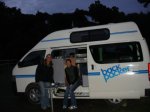
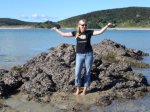
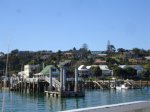
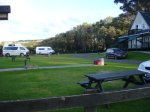
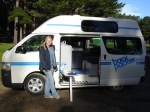
The camper van was booked and I must admit I was very excited about it being my home for the next four days as my friend, Angie, and I made our way up north to explore the ‘Twin Coast’ or the Northland as it is officially known. Our little van (which I will refer to as Nomad) was well cozy and came equipped with fridge, stove, kitchen sink, bed and a portable heater. The main selling point being the heater as the nights were a bit chilly but sadly we found out on our first night that it just did not want to work – at least we had our snow chains so we would not get stuck anywhere for too long!!

We started off by making our way along the west coast which was made up of beautiful coastlines, narrow and windy roads and Kauri Forests. It was a long drive as we wanted to get as far north as possible but we still made time to see the famous Kauri Tree – Tane Mahuta – wow it was tall! We did not get to see the pet dolphin at Opononi but we witnessed a sparkling sunset across the ocean as we headed to Rawene for our first night stay.

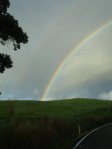
The excitement of reaching 90 mile beach in less than an hour got us up bright and breezy to catch the 7:30am ferry. I am sure the surroundings would have been spectacular but as it was so misty we could not see a thing but things soon changed. The views on our drive were spectacular as we followed rainbows in the sky and watched the mist lift eerily from the ground. I was not too sure how many times we would turn the corner and see yet another amazing view before us, but for sure the words ‘wow’ never tired from leaving my lips.

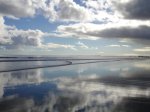
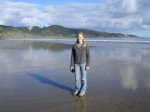
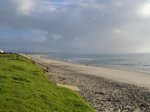
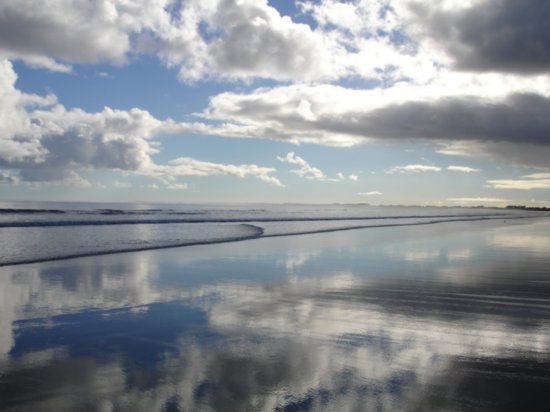
Our stomachs were grumbling by the time we reached Aripara, so we made ourselves some toast and a cup of tea before walking on the wet sand which mirrored the sky above perfectly. What a way to spend a morning. We did toy with the idea of driving Nomad out on the sand but we soon came to our senses and decided it was better to look at everyone else taking a drive than having to dig ourselves out of any sinking sand.

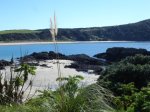
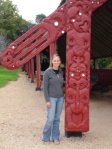
Aripara was the start of beautiful beaches as we headed towards the east coast admiring Doubtless Bay and getting out occasionally to stretch our legs on the white sands. It wasn’t all about beaches so we stopped at Waitangi for a bit of culture and to see where effectively ‘the modern New Zealand’ began.

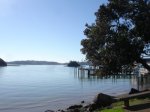
Our east coast part of our journey we slowed down the pace a little and explored some of the coastal towns of Paihia, Russell and Waipu Cove and of course many more stunning beaches that I certainly could never tire off.
 

Auckland Times

Auckland, New Zealand


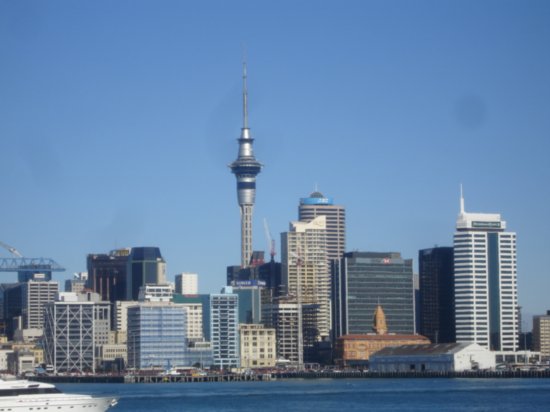
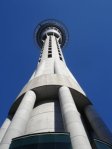
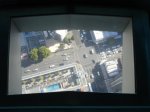
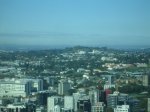
I am not sure how much I can elaborate on Auckland – you know been a city and all. But to be fair it does have its merits – beautiful bay views from almost every direction and definitely one of the most cleverest things the Kiwi’s did was build the Sky Tower. Not only does it add something to the skyline but it gives perspective and a sense of importance. No not the Tower, although it does ‘tower’ over everything, but the views are just incredible when you are up there and it shows how close the city is to it all – volcanoes, the harbour, waters, greenhills and a growing and buzzing city.
I spent most of my days in Auckland with my friend Angie who I have not seen for a over 5 years – so I got to see the real deal of living here – the suburbs. Filled with gorgeous houses with wooden finishing, porches, balconies and really big rooms (okay that is the London thing coming out). When I wasn’t walking down Queens street trying to find a warmer jacket for the chill, I was up the tower staring at the view from the Skytower and best of all sampling some of the local wines.

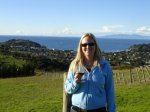
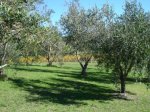
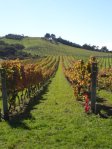
Boutique they call it on Waiheke island -which basically means they only focus on quality. Each vineyard was unique in their wine and making up the most of the views from the country houses. Being autumn everything was gold – the trees, the vine leaves, the sunshine, some of the white wines and the olive oils. Talking about olive oil did you know it could taste like pepper, thyme, apple and nasturtium flowers? Me neither – I guess you learn something new everyday!!!


My visit to Rapa Nui


“One of the most remote inhabited places on earth, some 3800km from the closest civilization”

Easter Island, Chile


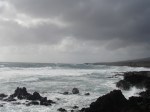
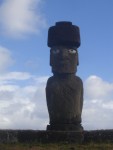
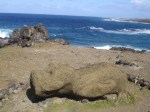
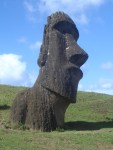
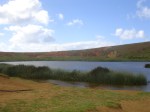
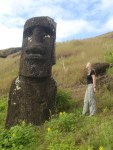
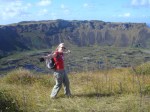
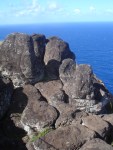
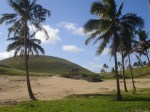
I walked along the green and brown grassy plains, while the wind wrapped around me. The view in front of me was magnificent, navy blue and aquamarine foamy waves constantly crashing into the rugged coastline. A coastline that seemed to go on forever – well I guess I was on an island! Isla de Pascua (Easter Island) to be precise, one of the most remote inhabited places on earth, some 3800km from the closest civilization. I wanted to stop and keep looking, take in the views slowly but something made me keep walking and then I saw him – Ahu Ko te Riku – one of the biggest Moai´s on the island noticeable by it’s red hat and white eyes. Impressed – most definitely and this was only my first day!!I have spent about 5 days on the island so far and there has been so much to take in and so much to see that I am still trying to decided between a number of things what my favourite place was and what activity I enjoyed the most? Was it…

Thinking @ Playa Pea
Aptly named Pea – it is probably one of the smallest beaches on the island. It became my haven for hours while I put my thoughts together so that I could share some of the magic of the island with you.

Relaxing @ Anakena Beach
Well you should all know me by now – if there is a beach around I will find it. Anakena is the most beautiful beach on the island, I spent the day relaxing either staring at the turquoise water or admiring the Ahu Nau Nau Altar – the best preserved alter on the island only for the fact that it was hidden for many years under the sand.

Driving @ slow speed
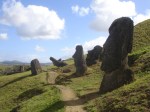
Maximum speed was 60km on the tar road and there is only two! I was lucky enough to meet some lovely people at the hostel and hire a 4×4 for the day. I drove around the island for about 8 hours stopping at some wonderful sites: Maoi, Ahu, fallen Maoi, volcanoes and beaches all the time giving ourselves enough time to take photos, explore and have lunch – far more than if we joined a tour for the day.

Taking Pictures @ Volcano Rano Raraku
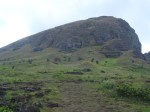
Nicknamed the ´Quarry´ or the ´Nursery´, this is where it is believed the statues were built and you can still see many in different stages of development. My favourite part of this site was walking into the volcano to see the many undisturbed statues amoung the yellow flowers and of course taking lots and lots of photos.

Just looking @ Ahu Tongariki Alter
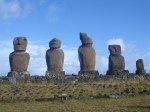
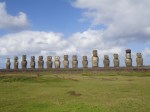
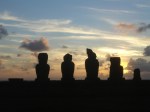
The most well known or photographed alter, standing tall with 15 statues. These remarkable Moai´s have twice been toppled in their life time – once during inter-war fighting and then again when a tsunami hit the island. You must admit they are in pretty good shape for taking such a beating.

Exercising @ Volcano Rano Kau
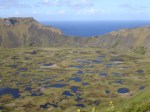
Taking a 1½ hour walk along the coast and through many trees up to this Volcano was great exercise. All made worthwhile by the beautiful view – a blue and green crater reflecting in the sun.

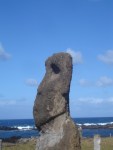
I have not mentioned everything on the island you will be pleased to know! There are about 900 Moai and 270 Ahu´s scattered around the coastline and judging by my photos I have done a good job in trying to snap them all. Probably it was a good idea not having captured them all but I will definately be leaving this spiritual place feeling relaxed, content in knowing that I have experienced all the elements the island had to offer. But it will seem that I will still be leaving the island asking myself one question – Why do all the statues face inland?

Where I stayed:
Kona Tau Youth Hostel

Definitions:
Moai = Statues
Ahu = Alters

Sea Lions rule the bay

Galapagos Islands, Ecuador


The Galapagos – a place so enriched with wildlife, it is hard to imagine some of these beautiful creatures are still endangered.

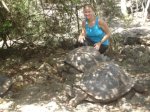
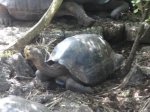
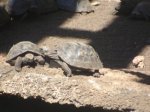
The Galapagos – takes you back in time, to a prehistoric world, a world filled with giant tortoises and iguanas. There are many ways I can describe these islands and for me and I am sure for everyone that has visited or will be visiting a complete privilege, an all enthralling experience each and every day.

I was lucky enough to spend a week in the Galapagos, with 5 days being on a small cruise boat, Aida Maria, exploring the south islands with 14 other just as excitable passengers.

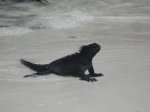
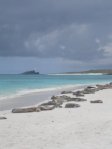
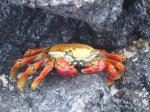
My first few days on Santa Cruz island were like being part of a cartoon – a magical land where everything seems perfect. I walked along the pure white sand of Turtle Bay while watching deep black marine iguanas merge from the sea, returning just a slight tilting of the head in acknowledgment that you were there. There were plenty of them along with bright red crabs scattered on the rocks, peering and watching you warily as you passed.

If time had stood still, this is where I would want to be! I know it sounds surreal and I will admit I asked myself the same question was everything truly happening, was I actually gazing out at the sunset over the ocean while spotting elegant manta-rays somersaulting out the water at intermittent occasions.

The boat I stayed on was great and the bonus was I had a small cabin to myself with bathroom. There was enough space on deck to enjoy the views and something I am not used too – mounds and mounds of food. My only excuse for eating it all was I needed to keep my energy up for my next excursion – which for me generally meant racing around in the water with my camera trying to capture all the fish I could see.

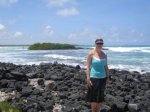
My route took me around the south islands: Santa Cruz, Santa Fe, Española and Floreana. Each offered something new and more of the same beautiful creatures.

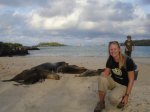
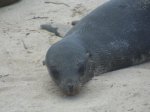
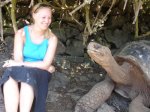
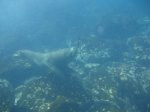
The sea lions ruled the bay – on every island they were irresistibly cute: dreaming contently in the sun, playing in the surf and swimming around you while you snorkelled.

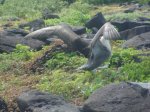
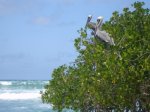
While I wasn’t in or on the water, I was walking around the islands visiting both marine and land iguanas, seeing the famous blue footed boobies – you guessed it the ones with the bright blue feet and watching the albatross waddle to the cliff edge to take off into the sky.

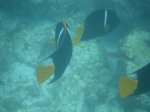
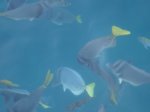
On my last full day sailing I got a chance to snorkel in an amazing place – Devils Crown. The water was crystal clear and I got to experience snorkelling with black tip reef sharks (plenty of them just lurking below you), marble rays, turtles, tropical fish and sea lions all the time while admiring the stunning rock bottom covered in electric blue and orange starfish.

´Can I stay longer?` was my first thought when it was time to leave this place. A place I hope to one day return. A place I will hope will stay as enriched and magical for all who visit.


Culture Time

Bogota, Colombia


After a lazy few days in Cartagena it was back to Bogota for a bit of Culture. I was unsure of what I was to find in this city but I was surprised to be greeted by beautiful Colonial architecture and art. I had also not expected the drop in temperature and I am sure my jumper got a complete shock to be pulled out the bottom of the bag for the first time in three months.

I generally wandered around the the historic center of the city, La Candelaria, which is filled with churches and museums taking pictures and visiting some of the must see places.

Donacion Botero
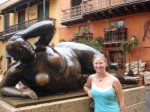
Is one of the art museums in Bogota holding the collections of Fernando Botero. For those that don’t know, Botero is a famous Colombian artist well know for his satirical take on human plumpness. I was pleasantly surprised and delighted by his work (pictures included) with my favourite being Mother Superior. I friend who is a dietician had decided that these will work wonders in her office at the NHS as an incentive to lose weight 🙂

Police Museum
I rushed in here about 30mins before closing time which was an added bonus as the young policeman took me straight to the most interesting and probably the most visited section of the museum – the story of the capture and demise of cartel leader, Pablo Escobar, who was finally killed in December 1993 by an elite armed unit known as the Search Block.

The actual museum is nothing fancy but houses Escobar´s Harley Davidson which I think is worth around 200million CO Pesos, his jacket he wore when he was killed, the original ´wanted´posters for his capture and what looks now like very antiquated tracking equipment which was used to find him after his escape from jail.

The museum also shows you photos of all those working for Escobar along with pictures of the killings of each of the leaders – a bit gruesome but guess they want to prove that they actually killed these people.

Plaza Bolivar
I was also there to witness a day of remembrance for all the people that died on the 9th April following the assassination of the most popular politician Jore Eliecer Gaitan. Bolivar Plaza – normally known to be filled with pigeons was also covered in white bricks each symbolising a person that had died (I do apologise if some facts here are not too accurate – my Spanish is not that perfect yet).

A 400-year old town
Leaving Bogota behind I continued my journey to the peaceful and friendly town of Villa de Leyva, about a 4 hour drive from the city, if your bus doesn’t break down that is…

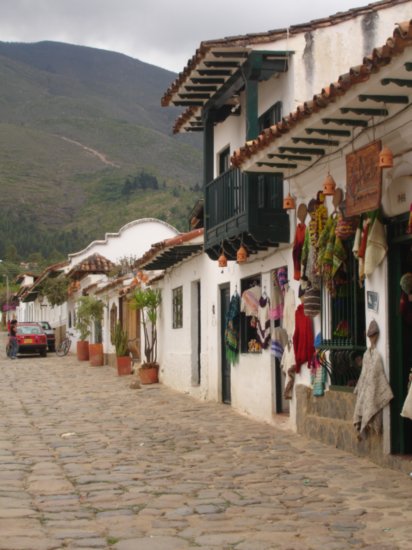
The town is Spanish looking with lots of friendly people. Everywhere you walk you are greeted by the locals with a nod of the head, a smile or a just a simple ´Hola` and it certainly makes you feel very safe to just wonder around.

It also meant that I felt confident enough to walk on my own to find one of the local vineyards some 20 minutes away. It was my first wine tasting/tour in Spanish which was quite a challenge but as the Guanani Vineyard is quite small I was able to grasp the main points and find out that the vineyard only had 5 members of staff with most of the work still done by hand. I got to sample some very tasty wines as well as a fruit wine made from a tropical sweet and sour fruit called Fei-Joa.

I was sad to leave the cosy town of Villa de Leyva and even more sad to have to leave Colombia all together. I do hope to return someday (when I have some more money) to visit more beautiful places like San Andres and Santa Martha.


Local buses, white sand and a colonial town

Cartagena, Colombia


I fell in love with Colombia the moment I landed at the airport. Strange – yes, but everyone was so friendly and full of smiles that it was hard not too – a total contrast to the Venezuela.

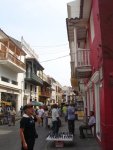
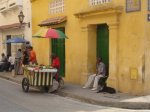
I caught a connecting flight from Bogota to Cartagena, a beautiful colonial town where the warmth of the people is highlighted together with earthy tones of mustard, terracotta and pine green painted houses and shops. You could certainly get caught up for days wondering the streets, indulging indulging in numerous cups of coffee in the many plazas but a trip to Cartagena is not complete without a visit to Playa Blanca – (translated as White Beach.)

To reach Playa Blanca you can take the tourist route by hopping on a boat for about 15,000 CO Pesos each way but what they don’t tell you is that you can also reach the beach by taking the bus from the local market. This would be the local peoples` preference as it is obviously cheaper even though it is a longer journey.

I was more interested in riding along with the locals to the beach so four us decided to hop on the bus and see where it took us. It was not too straight forward – it took a bus, a ride on a ferry across the river and then another bus along a windy, sand road. I was at one stage wondering if we were indeed heading for the beach but decided that because everyone seemed really happy and having fun on the journey that if we did not get to Playa Blanca then at least it would be an interesting place.

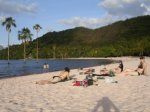
I was not too be disappointed as I was greeted at the end of my journey by a exquisitely beautiful white sandy beach and a calm turquoise and blue sea – I certainly felt like I was in heaven. As it turned out the day got better and better the longer I lay on the beach.

My highlights include

  • Practicing my Spanish with the local artists trying to sell their wares and been told that I spoke very well
  • Receiving a massage
  • Being given a free necklace to wear by a local artist just because I was his new friend
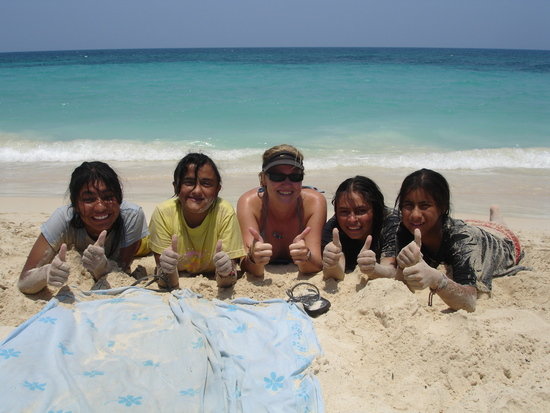
  • Playing with five young Colombian girls on the beach and hearing all about their lives away from their home in Bogota and their love of music
  • Receiving a friendship bracelet from the young budding musicians
  • Chatting with the local students both local and foreign AND the best of all
  • Getting a free ride home on the bus with our new friends Jorge and Carlos. The free ride home on the bus was just fantastic. It was absolutely packed with people and scorching hot but I soon forgot all about it when the bus driver cranked up the music and everyone began to sing and exchange lots of laughs.

I have tried to capture some of my journey on video so that you can too experience what I did – it is not the greatest footage as the road was extremely bumpy. It should have taken us about 1½ hours to get back to the city but as we had a mini breakdown (typical in South America) it took us closer to three hours.

I could not complain as the entertainment was first class and a typical reflection of the Colombian people. My perfect day extended into the night with our new friends as we joined them in having a drink and a lesson in some new salsa moves.

Beaches, major cities and stunning wildlife

Caracas, Venezuela


The simmering heat remained with me as I left the Orinoco Delta and made my way north towards the Caribbean sea. Even the local people were feeling it and the it was not uncommon to see children playing in portable swimming pools and picnics by the river but my favourite scene was a woman lying in a hammock cooling herself down with a garden hose – absolutely classic!

Beaches
Being the Easter break things were a lot busier than usual and there were a lot of people on the roads enjoying their holiday. Unfortunately it meant a relaxing time on Playa Colarado was permeated with crowded beaches, constantly loud music and most disappointedly streams and streams of rubbish littering this beautiful area. However, determined for a good beach I did manage to find (although the route to get there was most unpleasant and stinky) an almost deserted cove and got to enjoy a more relaxing time on the beach while watching the small crabs run up and down the beach.

Leaving Playa Colarado we visited the main city of Caracas before once again heading for the sea. This time we went to the sleepy town of El Choron near Puerto Colombia. The town was full of character with old buildings, wooden fruit stalls and other small shops.

Los Llanos
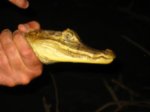
As much as I did not want to leave the beach the thrill of seeing some exotic animals was too exciting. So it was off to Los llanos (meaning the flat plains). Besides the beautiful bird life (I think we saw over 50 varieties of birds) I was extremely lucky to see a giant Anteater who unfortunately was far too fast to take a decent photo off and an Orinoco crocodile having its lunch.

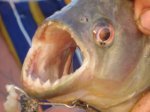
The days were scorching hot but unfortunately we could not swim as the rivers are filled with cayman and piranha. A little less piranha now as we caught a few for our dinner that evening. In between spotting wildlife and catching fish we came across a Mata-Mata turtle – a wonderful find as this prehistoric turtle is not seen very often. Our guide picked it up to show us how its heads curls sideways into its body and I could not believe the stench. This is the reason why these turtles still remain today as the locals will not eat them because of the smell – aren’t we lucky!

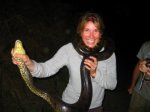
One of the evenings we set off on the river in search of the night animals. You can´t really see too much on the river at night and it was not long before I had my feet on the chair in front of me as fish constantly jumped into our boat – I was not sure if it was going to be a fish that could easily bite off my toe or those sneaky silver dollar fish just trying to scare me. It was a little tense for a while as we waited for another fish to hit us but all was forgotten when we spotted it – an anaconda – just a head as it was taking a breath of air. Our guide was in the water in a flash and after about 5 to 10 minutes had finally wrestled it out of its underwater cave for us to see. It was about 3 meters in length and a lot skinny than I had expected but it was still an Anaconda. Everyone got a chance to drape the snake around their necks and take lots and lots of photos – sorry to disappoint you all but I declined the offer and watched everyone else as they squealed in delight.

After we had got our fill of excitement it was off to the town of Merida, nestled in the Andes, to party at El Hoyo del Queque – described as the best bar in the world. We got to salsa all evening to the Latin American beats which was great fun.

Wildcats and Waterways

Orinoco Delta, Venezuela


I arrived at Boca Uracao – it was a Monday afternoon and the port was heaving with people most who were just actually sitting around and looking like they were taking in the atmosphere, pretty much like we were while we waited for our speed boat transportation.

For those who are unaware The Orinoco Delta is a series of waterways that weave through the jungle and the only way to get to the remote parts is by boat.

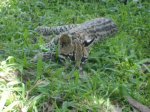
Finally my wish to see a jaguar came true when I arrived at the Orinoco Delta Lodge, my relaxing accommodation for two nights. He was still very much a baby and played a lot rougher than a kitten – I made sure my toes were tucked away – absolutely gorgeous to watch.

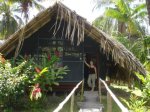
The Lodge I stayed at was really unique as each of the chalets had no windows but a series of mesh on all four sides allowing you to hear nature, see the river and sunrises without leaving the comfort of your bed – what bliss.

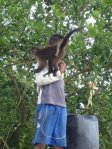
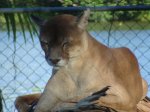
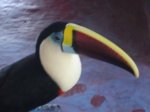
Staying at the lodge also let me experience close up some of the animals native to this area.  The lounge area was often visited by a Toucan and Macaw – who liked to sneak up on you for that last piece of bread on the plate, the very friendly Spider Monkey who often jumped up next too you to take your hand in his like you were his long lost friend – aahh! AND then there were the cats, the baby jaguar and the elegant Puma, who unfortunately but luckily for us was actually enclosed in a cage.

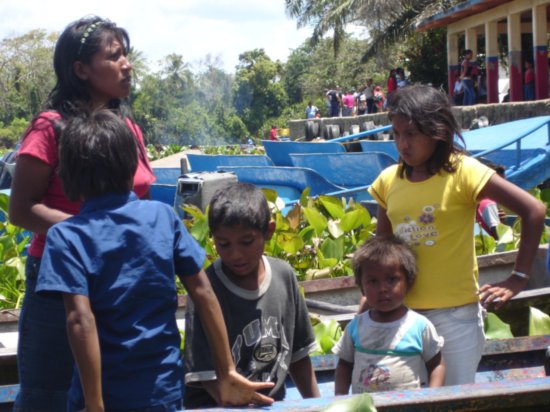
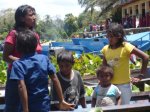
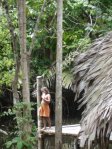
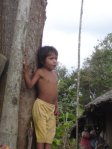
As I mentioned the only way to get around the Delta is by boat, so we spent most of our time on the water motoring up the waterways to view the beautiful surroundings, birds and sometimes if we were lucky some wild monkeys. On the riverbanks native inhabitants – the waroa Indians – still live. Their housing is very simplistic, a wooden construction on stilts, with a few hammocks and cooking equipment. We waved at the children as we went past them, but as they are reserved and shy in nature is was not too often we got a wave back. I was lucky to visit one of the families for lunch and smile at the little girl with big brown eyes.

It was an idyllic few days in the Delta before we had to catch the boat back to Boca Uracoa – which looked like a different place, the hustle and bustle had left the port – maybe they too were sad to see us leave.


Chasing Waterfalls

Ciudad Bolivar, Venezuela


I cant believe I have been in Venezuela for almost three weeks now and have not communicated with you all on my journey – I think I may have fallen into the Venezuelan mind set that not only is tomorrow another day but the day after next and the next….

The people here are way too chilled and so enjoy a more relaxing way of life. It does however seem in most parts that your role in society is defined by your gender as you often see men drinking beer in the street cafe´s while the women look after the children while chatting to the lady next door. But hey everyone thinks it seems to follow the general South American lifestyle or attitude but it is the first time I have had to wait 1½ hours for a hamburger or change my watch by only 30 minutes at the border so that they are in a different time zone – well they are in more ways than one. It is what makes the country unique and the reason why I have loved my time here.

Entering Venezuela from Brazil was a relief for me as for one I was now once again in Spanish speaking land and for another I did not quite gel with Brazil.

It was my time for a chilling out period and what was not a better way than exploring the beautiful landscape of the Gran Sabana. The Gran Sabana is in some cases pretty much flat vegetation intermingled with hardy colourful plants and waterfalls. I should not forget Mount Roraima where travellers around the world flock around the world to climb for magnificent views.

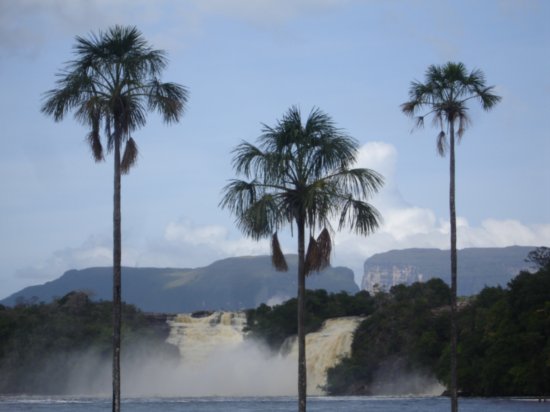
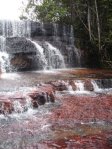
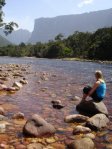
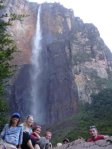
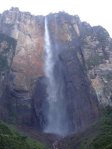
But for me it was the waterfalls that made it interesting. From the red floored waterfall Salto de Jaspe to the sharped angled waterfall of Salta de Kama and of course the most famous – Salto de Angel (Angel Falls). The highest waterfall in the world it falls from the Tepui some 980 meters to a rock pool beneath. Being the dry season there was not as much water as normal but the sheer fact you had to crane your next to see the top showed you just high up it actually was.

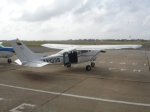
My trip to Angel Falls was great. Leaving from Ciudad Bolivar I caught a small 6 seater plane to Canaima National Park – I could not believe what a smooth ride it was and how breathtaking the scenery was, as we flew over green forests, meandering rivers and the flat rock formation of the Tepui.

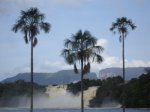
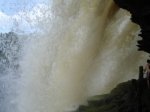
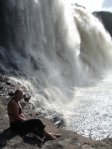
It was an extremely hot day when I arrived so to cool down I took a motorised canoe across the Canaima Lagoon and walked under Salto de Sapo (one of the curtain waterfalls) for a throughly soaking shower. After sunning myself on the other side and drying my clothes I then had to retrace my steps underneath the waterfall in order to get back to the lodge for dinner.

The next day I was extremely excited as we were going up river to finally get a glimpse of the falls. The boat trip took about 4 hours and it was partly relaxing yet energetic as we maneuvered through the rapids trying not to get too wet as we dodged the bucket loads full of water splashing into the boat.

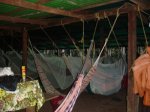
Once we reached our base camp it was about a 1½ hour walk through the forest to get to the view point. My pictures do not do complete justice to the view but as I was looking at the waterfall I will still remember my mind saying ´Wow – look how high it is!` I was pleased to have finally seen Angel Falls and that night I certainly looked forward to sleeping in my hammock in the open air to dream about waterfalls and surfing rapids.


Deep into the Jungle

Manaus, Brazil


I had never really had a picture in mind of what the jungle – The Amazonas – would look like. I guess my only idea was based on Walt Disney´s ´The Jungle Book` as a place filled with all these exotic animals – not quite! I had also not envisioned been guided through The Amazonos by an Indian Rastafarian from Guiana. He was quite a character, a all time Mr Cool, jungle junkie and nature lover who loved to sing ´Everything is going to be alright`. He was at total ease with his surroundings which I found extremely alien and at times intimidating.

I spent three days and two nights in the jungle covered in my new perfume – also known as DET – on both body and clothes. I faired better than the rest of the group in the bite department but did annoy myself that I had to drink so much water as the result was always more more bites on the bum – those sneaky mossies just seemed to be waiting for the very moment.

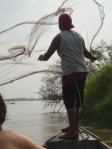
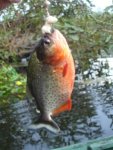
I enjoyed the boat trips up and down the small channels of the Rio Amazonas for the breeze it brought in the heat, the distant view of the dense jungle and to sit quietly for a good couple of hours trying to catch Piranhas with pieces of fresh chicken. I managed to get a few nibbles as they feasted on my bait while clearly avoiding being caught – I am sure they must love novice fisherman. A few others were a lot luckier and it resulted in Piranha soup for lunch the following day.

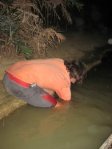
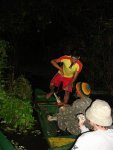
Our night adventure on the water was eerie and exciting as we motored along the unnaturally calm river from bank to bank looking for Cayman which would be big enough to eat. I have never been on a hunt before and it is some serious business. One of the local jungle residents easily balanced on the boat and managed very quickly to spear and catch a female cayman. It was tied up for safe transportation back to base – well for the benefit of the passengers that was.

The next day we once again ventured on the river in search of some Pink Dolphins (yes they do exist) before trekking into the jungle for the night. I was not overly excited about the prospect but still needed to see what this jungle talk was all about. We made our camp (15 minute walk from the waters edge) using all resources the jungle could provide us with. So while some people helped chop down trees, others swept the area clean, built a BBQ or started marinating our skinned cayman in garlic, salt, lime and citrus herbs found in the jungle. I did ask myself at this stage who on earth would ever want to be on Survivor.

The cayman was just yummy – a smooth smokey flavour from the fire and neither tasted of chicken nor fish. It was not all about building camp and we made tracks into the jungle to explore. Our Rastafarian guide showed us medicinal plants for malaria, cuts, bruises, water vines (whose water tasted very sweet), how to make fans out of the local palm tree leaves, crack open fresh Brazil nuts with a machete and I guess the best highlight of the day was to see a tarantula.

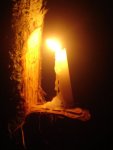
Back at camp we set up our hammocks and mossie nets before settling down on a log to enjoy the relaxing properties of cacacha with dinner. Even with a few strategically placed candles the jungle was very very dark and I did hope that no snakes would be going for their nightly stroll. When it actually came down to going to bed it really was entertaining and annoying all at the same time as some people hammocks broke when safely settled inside and then to top it all once we were all in bed I found myself hitting the hard wet ground with a big thud – along with everyone else. This happened a few times and at this stage I did not appreciate the quirky saying of our guide ´Everything is going to be alright` and wished ever so hard that the morning would come so we could leave this place that made me feel very uncomfortable.

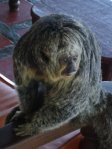
I had a big smile as we got back on the boat and smiled even more when I got to see a sloth for the very first time. My jungle trip was finally over and I could not wait to get back to the city of Manaus.

Comment dowloaded from Travelpod
Green with envy!!!
Hey my dear… your jungle trip sounds AMAZING!!!! I’m very jealous and now DESPERATELY want to quit my job and do it all again!!! You sound like you are having great fun…. even if you hd to trek through the mozzie filled jungle….
Miss you!
L xxxx From lizzielizard77, on Mar 14, 2008 at 08:37AM